Sudden Chest Pain: Possible Causes, What to Do First & When Physio Can Help
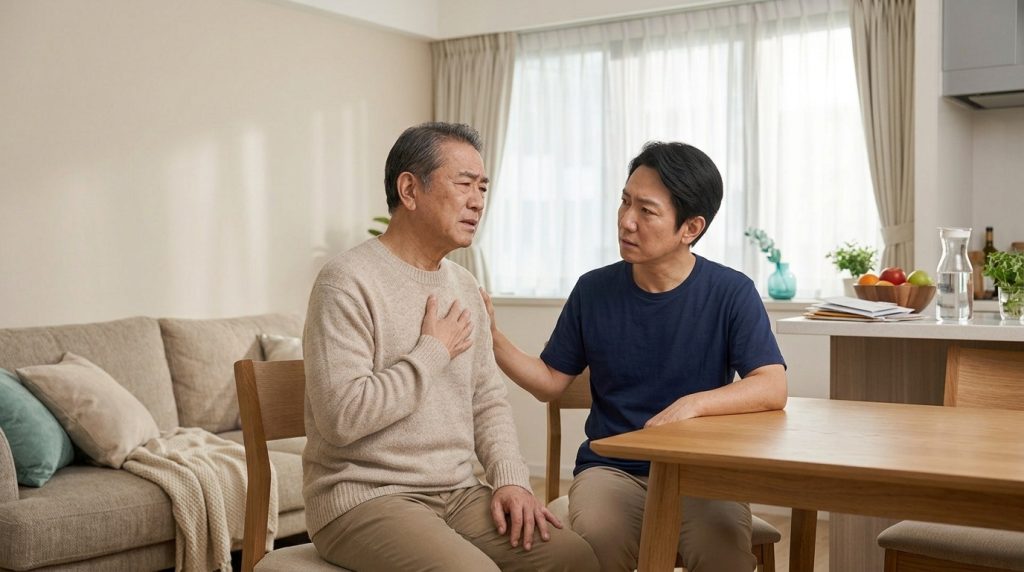
Sudden chest pain can come from the heart, the lungs, the muscles and ribs of the chest wall, the digestive system or anxiety, and only a doctor can tell these apart safely. If the pain feels heavy, tight or crushing, or comes with breathlessness, sweating or nausea, call 995 straight away. Physiotherapy helps once a diagnosis is clear.
If you have chest pain right now: call 995 if the pain is heavy, tight, squeezing or crushing, lasts more than a few minutes or keeps coming back, spreads to your arm, shoulder, neck, jaw or back, or comes with shortness of breath, a cold sweat, nausea, dizziness or unusual tiredness. Do not drive yourself to hospital. If you are unsure, call 995 anyway and describe your symptoms.
This article is for educational purposes and does not replace a medical or clinical assessment.
What causes sudden chest pain?
Sudden chest pain is pain or discomfort anywhere between the base of the neck and the upper abdomen that comes on quickly, often without an obvious trigger. It can feel sharp, stabbing, burning, dull, heavy or tight, and it may stay in one spot or spread elsewhere. Because so many structures sit close together in the chest, very different problems can produce surprisingly similar sensations.
Doctors usually group the causes of chest pain into a handful of families:
- Heart and blood vessels: a heart attack, angina, inflammation around the heart, or a tear in the main artery.
- Lungs: a blood clot in the lung, a collapsed lung, a chest infection or an asthma flare.
- Muscles, ribs and joints: a strained chest muscle, irritated rib cartilage or stiffness in the upper back.
- Digestive system: acid reflux, spasm of the food pipe or gallbladder problems.
- Anxiety and panic: a surge of stress hormones that causes chest tightness, a racing heart and fast breathing.
The 2021 chest pain guideline from the American Heart Association and the American College of Cardiology reports that among adults who come to an emergency department with chest pain, only around 5% turn out to have an acute coronary syndrome, while more than half are eventually found to have a cause outside the heart. That is genuinely reassuring, but it does not mean you can work out the cause on your own. The guideline also stresses that “chest pain means more than pain in the chest”, and that anyone with sudden symptoms should seek care early.
Heart disease is common in Singapore too. The Singapore Myocardial Infarction Registry recorded 11,631 heart attacks in 2020, about 31 every day, and the Singapore Heart Foundation advises calling 995 even when you are not sure whether it is a heart attack.
Serious causes: when to call 995 immediately
Some causes of sudden chest pain are medical emergencies where every minute counts. These are the ones doctors check for first:
- Heart attack. Often felt as heaviness, pressure, squeezing or tightness in the centre of the chest that lasts more than a few minutes or comes and goes. It may spread to the arms, left shoulder, neck, jaw or back, and can come with shortness of breath, a cold sweat or nausea.
- Aortic dissection. A sudden, severe tearing or ripping pain that often travels through to the back. It is uncommon but life threatening.
- Pulmonary embolism. A blood clot in the lung can cause sharp chest pain that worsens on breathing in, along with sudden breathlessness or a fast heart rate. The risk is higher after surgery, a long flight, a period of immobility or with a swollen, painful calf.
- Collapsed lung (pneumothorax). Sudden, sharp pain on one side of the chest with breathlessness, sometimes in tall, slim young adults or people with existing lung disease.
- Inflammation around the heart (pericarditis). A sharp pain that is often worse lying flat and eases when leaning forward. It needs prompt medical review.
When you call 995, the ambulance crew carries equipment and medication to start treatment on the way, which is why the Singapore Heart Foundation advises against driving yourself or being driven to hospital. Follow the dispatcher’s instructions and avoid eating, drinking or taking medication unless a doctor or the dispatcher tells you to.
A note from our physiotherapists: we never treat chest pain as a muscle problem until heart and lung causes have been ruled out by a doctor. If you contact us with new chest pain, our first step will always be to direct you to the right medical care.
Less urgent causes of sudden chest pain
Once a doctor has excluded the serious causes, many people are told their pain comes from somewhere less dangerous. These causes still deserve proper care, because pain that keeps returning can be worrying and disruptive.
Musculoskeletal chest pain (sudden onset)
Musculoskeletal chest pain comes from the muscles, ribs, cartilage and joints of the chest wall and upper back. It often starts suddenly after lifting something heavy, a twisting movement, a hard bout of coughing or a new gym routine, and it is usually sharp or achy rather than crushing. Typical clues are pain that you can press on and reproduce, pain that changes with certain movements or positions, and pain that is worse when you take a deep breath or turn your upper body.
Common examples include a strained muscle between the ribs, costochondritis (irritation of the cartilage where the ribs meet the breastbone) and pain referred from a stiff upper back. In Singapore we often see this in desk workers who spend long hours hunched over a laptop, in people who have recently started weight training, and in parents who carry young children or heavy shopping on one side. You can read more in our guide to musculoskeletal chest pain. Upper back stiffness from desk work often comes with neck tension too, which we cover in our article on neck pain physiotherapy for desk workers.
Chest pain and difficulty breathing: respiratory causes
Chest pain and difficulty breathing together always need a doctor’s attention, especially if the breathlessness is new, severe or getting worse. Possible causes include a chest infection or pneumonia, inflammation of the lining of the lungs (pleurisy), an asthma flare or a flare of chronic obstructive pulmonary disease (COPD). These conditions often cause a sharp pain that catches on breathing in, a cough, fever or wheeze.
Once the cause is treated, some people are left with lingering breathlessness, a weak cough or difficulty clearing mucus. This is where chest physiotherapy and pulmonary rehabilitation can make a real difference, which we cover below.
Anxiety and panic attacks
A panic attack can cause sudden chest tightness or pain, a pounding heart, fast breathing, tingling in the hands and a strong sense that something is badly wrong. These symptoms are real and very distressing, but they overlap with those of a heart attack, so a first episode should always be checked by a doctor.
Once anxiety has been confirmed as the cause, learning how to slow and settle your breathing can help. Many people who breathe quickly and high in the chest during stress find that guided breathing retraining gives them a sense of control when symptoms start.
Female chest pain: are symptoms different?
Chest pain is the most common heart attack symptom in women as well as men. The difference is that women are more likely to have other symptoms alongside it, such as nausea and shortness of breath, according to the 2021 AHA and ACC guideline. The Singapore Heart Foundation lists these common heart attack symptoms in women:
- Chest pain or discomfort
- Unusual pain in the arms, back, shoulder, neck or jaw
- Shortness of breath
- Nausea
- Lightheadedness or sudden dizziness
- Breaking out in a cold sweat
- Unusual fatigue
Women sometimes dismiss these signs because they do not “feel” like a heart attack, and the guideline notes that women with chest pain are at risk of being underdiagnosed. If you are a woman with sudden chest pain or pain in the middle of the chest, especially with any of the symptoms above, take it seriously and call 995 or see a doctor promptly.
After the heart has been checked, women with chest pain may be found to have a musculoskeletal cause, reflux or anxiety, just like men. Our physiotherapists take the same careful approach for everyone, and female patients are welcome to bring a family member or friend to their session.
Pain in the middle of the chest: what does it mean?
Pain in the middle of the chest, behind the breastbone, is the area doctors are most cautious about, because this is where heart pain is most often felt. A heavy, pressing or squeezing pain here, particularly with exertion, stress or any of the symptoms listed above, should be treated as an emergency until proven otherwise.
Other causes of central chest pain include acid reflux, which often brings a burning feeling that is worse after meals or when lying down, spasm of the food pipe, and costochondritis, where the cartilage beside the breastbone becomes tender to touch. Pain that is clearly on one side is covered in our article on left chest pain causes and warning signs. For a broader overview, see our guide to chest pain causes, symptoms and when to seek help.
How chest physiotherapy can help after a diagnosis
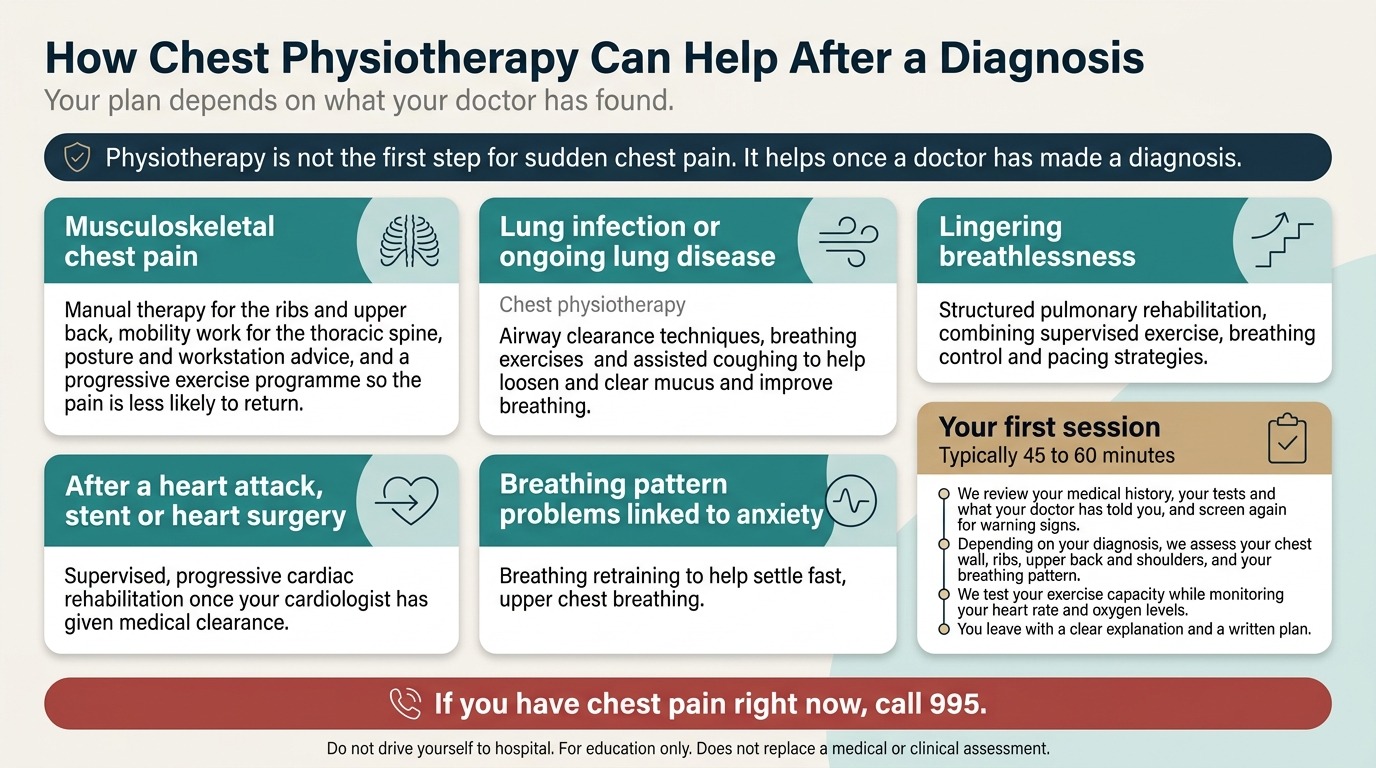
Physiotherapy is not the first step for sudden chest pain, but it plays an important role once a doctor has made a diagnosis. Wondering whether physiotherapy is right for you? If your doctor has ruled out an emergency and your pain is linked to your chest wall, your breathing or your recovery from a heart or lung condition, it very often is.
At PhysioVitae, how we help depends on what has been found:
- Musculoskeletal chest pain: manual therapy for the ribs and upper back, mobility work for the thoracic spine, posture and workstation advice, and a progressive exercise programme so the pain is less likely to return. See our musculoskeletal physiotherapy and rehabilitation service.
- Chest physiotherapy after a lung infection or with ongoing lung disease: airway clearance techniques, breathing exercises and assisted coughing to help loosen and clear mucus and improve breathing.
- Lingering breathlessness: structured pulmonary rehabilitation, combining supervised exercise, breathing control and pacing strategies.
- After a heart attack, stent or heart surgery: supervised, progressive cardiac rehabilitation once your cardiologist has given medical clearance.
- Breathing pattern problems linked to anxiety: breathing retraining to help settle fast, upper chest breathing.
What happens in your first session. Your first appointment typically lasts 45 to 60 minutes. We start by going through your medical history, any tests you have had and what your doctor has told you, and we screen again for warning signs, because safety comes first. Depending on your diagnosis, your physiotherapist may examine the chest wall and ribs to see which movements reproduce your pain, assess how your upper back and shoulders move, observe your breathing pattern, and test your exercise capacity while monitoring your heart rate and oxygen levels. You leave with a clear explanation of what is going on and a written plan.
Our clinical reasoning. We prioritise understanding and reassurance before exercise, because fear of chest pain often changes how people move and breathe. Many of the patients we see with chest wall pain have already been to A&E, had normal heart tests, and yet still worry every time the pain returns. Once they understand why the pain is happening and how to settle it, they usually move more freely and recover more confidently.
What progress looks like. Recovery varies from person to person. Simple chest wall strains often settle over a few weeks with the right advice and exercises, while cardiac and pulmonary rehabilitation programmes usually run over several weeks with regular reassessment. We set realistic goals with you and track progress objectively rather than making promises.
Who you will see. All our physiotherapists are registered with the Allied Health Professions Council (AHPC) of Singapore. Our founding physiotherapists, Koe Zi Yi and Rethinam Ganesan, each hold an MSc in Advanced Physiotherapy (Cardiopulmonary) with Distinction from University College London and are Certified Lifestyle Medicine Practitioners. Our principal physiotherapist Keith Chua holds an MSc in Advanced Physiotherapy (Cardiorespiratory) and specialises in cardiopulmonary physiotherapy and heart failure management.
Practical details. You do not need a doctor’s referral to see a physiotherapist in Singapore, but for chest pain we do ask that you have been assessed by a doctor first, and we will coordinate with your doctor or cardiologist where needed. Insurance coverage depends on your policy; if your rehabilitation follows a hospital stay, an Integrated Shield Plan rider may apply. Our guide to physiotherapy costs in Singapore explains typical fees and how to check your cover.
Frequently asked questions About Sudden Chest Pain
When should I call 995 for sudden chest pain?
Call 995 if your chest pain is heavy, tight or crushing, lasts more than a few minutes, or spreads to your arm, neck, jaw or back. Also call if it comes with breathlessness, sweating, nausea or dizziness. If you are unsure, call anyway. Do not drive yourself to hospital.
Can sudden chest pain be caused by a muscle strain?
Yes. Straining a chest muscle or irritating the rib cartilage can cause sudden, sharp chest pain, often after lifting, twisting or coughing. The pain is usually tender to touch and changes with movement. A doctor should rule out heart and lung causes first.
What is chest physiotherapy?
Chest physiotherapy helps clear mucus from the lungs and improve breathing. It uses airway clearance exercises, breathing techniques and assisted coughing. It can help people with chronic lung disease, respiratory infections, bronchiectasis or chest complications after surgery.
Is exercise safe after a heart attack or stent?
Yes, when it is structured and progressive. Exercise is an important part of recovery, and cardiac rehabilitation usually starts after medical clearance from your doctor. A physiotherapist trained in cardiac rehabilitation will guide your exercise intensity, monitor your heart rate and help you return to activity gradually.
Do I need a doctor’s referral to see a physiotherapist?
No. In Singapore you can see a physiotherapist without a referral. For new or unexplained chest pain, though, please see a doctor first. We will coordinate with your doctor so your programme is safe and appropriate.
How long does a physiotherapy session last?
Sessions typically last 45 to 60 minutes, depending on your programme and individual needs. Your physiotherapist will recommend a treatment plan after your first assessment.
Your next step
If you have sudden chest pain right now, please call 995 rather than reading further. If your doctor has already ruled out an emergency and you are wondering what comes next, physiotherapy can help you understand your pain and recover with confidence. You can read about our cardiac rehabilitation programme for recovery after a heart event, explore our musculoskeletal physiotherapy service for chest wall and upper back pain, or get in touch with our Orchard Road team to book an assessment. For a quick question first, WhatsApp us on +65 8017 1206.
Written by the PhysioVitae Clinical Team. This article is for educational purposes and does not replace a medical or clinical assessment. If you have chest pain, seek medical care first.