

This article is for general information only and does not constitute financial or medical advice. Fees shown are indicative and subject to change. Always confirm pricing with your clinic and check with your insurer before booking.
Physiotherapy costs in Singapore range from S$80 to S$350 per session at private clinics, depending on the setting, the type of treatment, and how much of your session is spent directly with a qualified physiotherapist. If you are trying to budget for your care, decide between clinic options, or understand what your insurance covers, this 2026 guide breaks it all down plainly so you can plan with confidence.
Average Cost of a Physiotherapy Session
The phrase physiotherapy cost covers a wide range in Singapore. A subsidised polyclinic session is a fraction of what you would pay at a specialist sports rehabilitation clinic in the CBD, and that gap does not always reflect a difference in clinical quality. More often, it reflects the length of the session, the level of direct therapist time, the treatment modalities included, and the overhead costs carried by the clinic location.
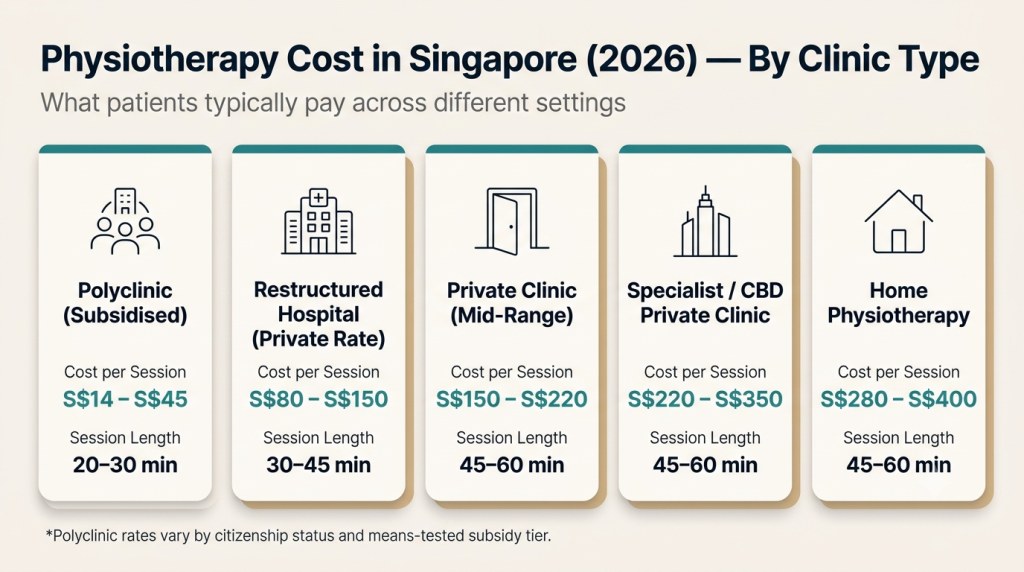
Here is what patients typically pay across different settings in 2026:
| Setting | Typical Cost per Session | Session Length |
| Polyclinic (subsidised) | S$14 to S$45* | 20 to 30 min |
| Restructured hospital (private rate) | S$80 to S$150 | 30 to 45 min |
| Private clinic (mid-range) | S$150 to S$220 | 45 to 60 min |
| Specialist / CBD private clinic | S$220 to S$350 | 45 to 60 min |
| Home physiotherapy | S$280 to S$400 | 45 to 60 min |
*Polyclinic rates vary by citizenship status and means-tested subsidy tier.
What this means in practice: A private clinic session priced between S$150 and S$220 will typically include 45 to 60 full minutes with a licensed physiotherapist covering hands-on assessment, manual therapy, and a personalised exercise component. A lower-cost setting may quote a similar headline fee but deliver only 15 to 20 minutes of direct therapist contact time. Before comparing prices, always ask: how much of this session will the physiotherapist actually spend with me?
What Affects the Price of Physiotherapy?
Several factors shape what you will pay. Understanding them helps you evaluate your options meaningfully, rather than choosing on headline price alone.
-
Clinic Type: Polyclinic vs Private
Polyclinics offer the most affordable pathway to physiotherapy for Singapore citizens and permanent residents, thanks to government subsidies. The trade-off is that appointment availability is limited, waiting times are longer, and individual session time with the physiotherapist is shorter. For straightforward, non-urgent conditions, the polyclinic route offers solid value.
Private physiotherapy clinics offer direct access without a referral, same-week or even same-day appointments, and longer, more focused sessions with continuity of care across visits. At PhysioVitae, every patient begins with a comprehensive initial consultation and assessment in the same first appointment. There is no separate triage step, no waiting for a referral to come through, and no working with a different therapist each time.
-
Type of Treatment
A standard musculoskeletal session covering assessment, manual therapy, and exercise prescription sits within the mid-range price bracket. Specialised programmes such as cardiac rehabilitation, pulmonary rehabilitation, post-surgical recovery, cancer rehabilitation, or neurological physiotherapy may carry different fee structures reflecting the additional clinical expertise, equipment, and time involved.
It is worth asking whether treatment modalities such as dry needling, ultrasound therapy, or shockwave are included in your session fee or charged separately. Some clinics include these within the standard fee; others itemise them. Transparent pricing is important to us at PhysioVitae, so we encourage patients to ask exactly what is included when they enquire about their first visit.
-
Number of Sessions Needed
The total cost of a physiotherapy programme depends on how many sessions your condition requires. A straightforward acute injury — a muscle strain, a mild sprain, or a first episode of back pain — may resolve well within four to eight sessions. Chronic conditions, post-surgical rehabilitation, or complex cardiopulmonary programmes are typically structured over eight to twelve weeks, and some conditions require ongoing periodic review beyond that.
Clinical note: The number of sessions needed depends on the condition being treated, your recovery goals, and how your body responds to treatment. After your initial consultation and assessment at PhysioVitae, your physiotherapist will give you a personalised treatment plan with a realistic session estimate, so you can plan your time and budget from the start.
Read More: Common Conditions Treated by Physiotherapy in Singapore
Does Insurance Cover Physiotherapy in Singapore?
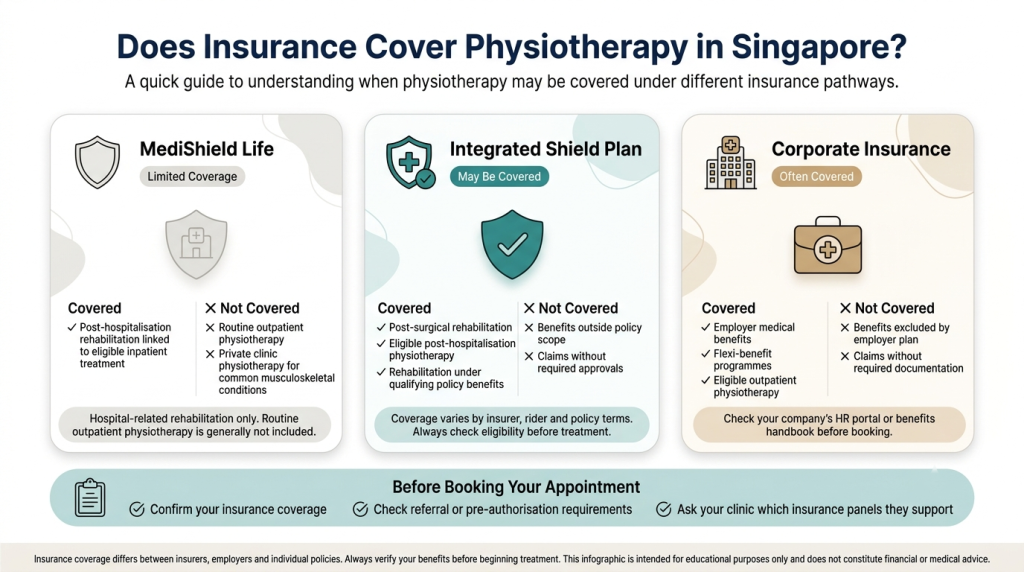
Insurance can significantly reduce the out-of-pocket cost of physiotherapy, but coverage depends on the type of insurance you hold, how your treatment is structured, and whether it is linked to a hospitalisation or surgical event. Here is a plain-language overview of the three most common coverage pathways.
-
MediShield Life
MediShield Life is Singapore’s mandatory basic health insurance scheme, covering all citizens and permanent residents automatically for life. It is designed to protect against large inpatient hospital bills, selected surgical procedures, and certain outpatient treatments such as kidney dialysis and chemotherapy. Routine outpatient physiotherapy at a private clinic — the kind most people seek for back pain, knee injuries, or sports rehabilitation — falls outside MediShield Life’s scope of coverage.
In practical terms, this means that for the majority of standard physiotherapy visits, you will be paying out of pocket, regardless of your MediShield Life enrolment. The exception is physiotherapy that forms part of a post-hospitalisation recovery programme linked to an admitted procedure. In that case, an Integrated Shield Plan rider may apply.
-
Integrated Shield Plans (AIA, Prudential, Great Eastern, and Others)
An Integrated Shield Plan, or IP, is an optional private insurance plan that enhances your MediShield Life coverage. If your IP includes a post-hospitalisation rehabilitation benefit rider, it may cover physiotherapy prescribed as part of your recovery following an inpatient procedure — for instance, rehabilitation after joint replacement surgery, cardiac surgery, or a neurological event.
The scope of this coverage changed meaningfully in 2026. Riders purchased before November 2025 retain their more generous terms, with deductibles covered and a lower annual co-payment cap. Riders taken out from April 2026 onwards now require you to pay the mandatory deductible first before coverage activates, and carry a higher co-payment cap. If your IP rider was recently purchased, check whether pre-authorisation is required and whether your physiotherapy provider is on your insurer’s panel before beginning treatment.
One practical tip if your physiotherapy is linked to a hospitalisation: ask your specialist to use comprehensive post-hospitalisation rehabilitative therapy referral wording rather than a generic physiotherapy referral. The right wording can unlock multi-disciplinary coverage for up to 365 days post-discharge, rather than limiting you to a short initial course of sessions.
Our advice: Insurance coverage for physiotherapy depends on the terms of your individual policy. Some plans include physiotherapy or rehabilitation benefits, while others may require prior approval or have certain limitations. We recommend contacting your insurance provider directly to confirm your coverage and any possible out-of-pocket costs. You are also welcome to check with our clinic staff regarding the insurance panels that PhysioVitae currently supports.
-
Corporate Insurance
Many Singapore employers include outpatient physiotherapy benefits as part of their group insurance or flexi-benefit programme. If your company provides a flexi-spending account or medical benefits wallet, physiotherapy at a private clinic is often an eligible expense. Check your HR portal or benefits booklet to confirm whether physiotherapy is covered and whether a GP referral is required to initiate a claim.
Corporate insurance claims typically require a detailed receipt and, in some cases, clinical notes or a brief report from your physiotherapist. Our team is experienced in supporting patients through insurance and corporate claims, and we can assist with the relevant documentation following your sessions.
Tips for Making Physiotherapy More Affordable
If cost is a genuine consideration, here are practical ways to manage the financial side of your care without compromising on the quality of treatment you receive:
- Check your corporate flexi-benefits first. Many patients discover that their employer’s flexi-spending scheme covers physiotherapy. This is often the easiest way to reduce out-of-pocket costs without changing which clinic you attend.
- Ask about session packages. For patients who require ongoing treatment, multi-session packages can reduce the effective per-session cost. Ask your physiotherapist after your initial assessment whether a package is appropriate for your programme.
- Clarify what is included in the session fee before you book. Some clinics charge separately for modalities such as dry needling, ultrasound, or heat therapy, which can add S$20 to S$50 per visit. A slightly higher headline fee that includes all modalities often represents better overall value.
- Book early in your recovery. Patients who see a physiotherapist promptly after injury onset typically require fewer sessions overall, because the problem has not yet developed compensatory movement patterns or chronic tension. Early intervention is often the most cost-effective choice.
- Link your IP rider to post-surgical physiotherapy before you begin. If you are recovering from a procedure, ensure your physiotherapy is properly connected to your hospitalisation claim and that your referral uses the most comprehensive wording available. This can unlock significantly more covered sessions.
- Ask whether home therapy is worth it for you. Home physiotherapy carries a higher per-session fee, but for patients who have genuine difficulty travelling, due to recent surgery, mobility limitations, or caring responsibilities, it removes transport costs, time off work, and the physical effort of attending a clinic. For the right patient, it can be the most practical and cost-effective option overall.
Read More: What the Geriatric Patient Journey Looks Like at PhysioVitae
Frequently Asked Questions About Physiotherapy Costs in Singapore
- How much does physiotherapy cost in Singapore in 2026?
Private clinic physiotherapy in Singapore generally costs between S$150 and S$280 per session for a full 45 to 60-minute consultation with a licensed physiotherapist. Polyclinic physiotherapy is significantly cheaper for subsidised patients but involves shorter sessions and longer waiting periods. Initial consultations may carry a slightly higher first-visit fee to account for the comprehensive assessment and treatment planning that takes place in that session.
- Do I need a doctor’s referral to see a physiotherapist in Singapore?
No. In Singapore, you can see a physiotherapist directly without a GP referral. This means you can book your initial consultation at PhysioVitae and begin your assessment and treatment in the same visit, without first queuing for a GP appointment. If you have complex medical conditions or have recently undergone surgery, your physiotherapist may recommend coordinating care with your doctor to ensure your rehabilitation programme is safe and appropriate.
- How many sessions of physiotherapy will I need?
The number of sessions depends on your condition, your recovery goals, and how your body responds to treatment. A straightforward acute injury may resolve within four to eight sessions. Chronic pain conditions, post-surgical rehabilitation programmes, or cardiopulmonary rehabilitation typically follow a structured eight to twelve-week pathway. Your physiotherapist will give you a personalised estimate and a clear treatment plan after your initial assessment at PhysioVitae — there are no open-ended commitments.
- How long does a physiotherapy session last?
Sessions at PhysioVitae typically run for 45 to 60 minutes, depending on your treatment programme and individual needs. That time is spent directly with your physiotherapist — covering your movement screening, hands-on treatment, and exercise prescription or rehabilitation work. This is one of the meaningful practical differences between private physiotherapy and polyclinic physiotherapy: the amount of dedicated one-on-one therapist time you receive within each session.
- Is cheaper physiotherapy worth it?
Not necessarily. The most important question is not the headline session fee but how much direct, qualified physiotherapist time is included. A session quoted at S$90 that involves 15 minutes with a therapist and 30 minutes attached to a machine does not represent better value than an S$180 session where the physiotherapist works with you for the full 45 minutes. When comparing options, ask specifically about session length, the proportion of time spent one-on-one with a physiotherapist, and which treatment modalities are included in the standard fee.
Book a Session at PhysioVitae
If you are ready to begin physiotherapy or if you simply want a clearer picture of what your condition needs and how to plan your care — our initial consultation is designed to give you both. Your physiotherapist will complete a comprehensive assessment, explain your likely treatment pathway in plain language, and provide a realistic session estimate so you can budget with confidence.
There is no referral required. You can call us on +65 8017 1206, message us through the website chat, or use our online booking form to secure your appointment. We see patients from Monday to Friday, 9 am to 6 pm, and on Saturdays from 9 am to 1 pm. Appointments outside these hours are available by arrangement.
To learn more about the conditions we treat and the care approach you can expect, explore our full physiotherapy services, browse our patient education resources, or review our frequently asked questions before your first visit. When you are ready, get in touch to book your assessment — no referral needed.