
A comprehensive geriatric assessment at PhysioVitae evaluates your older loved one across five key domains: physical function, cognitive health, fall risk, nutritional status, and psychosocial wellbeing, to build a personalised rehabilitation plan that targets the root causes of decline, not just the symptoms presenting on the surface.
What Is a Comprehensive Geriatric Assessment?
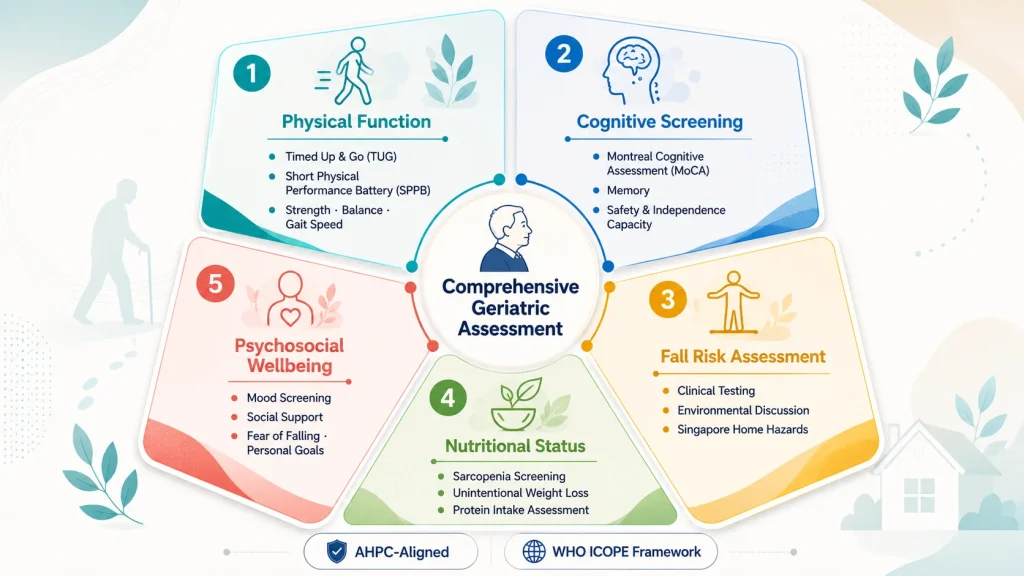
A comprehensive geriatric assessment (CGA) is a structured, multi-dimensional clinical evaluation designed to understand the full health picture of an older adult. Unlike a standard GP appointment focused on a single complaint, a CGA maps how physical, cognitive, emotional, and environmental factors interact, then uses those findings to guide a coordinated care plan tailored to that person’s goals and life circumstances.
For many families in Singapore, the question isn’t whether their elderly parent needs help; it’s knowing where to start. A comprehensive geriatric assessment answers that question with clarity.
Read more: Physiotherapy in Singapore: What to Expect, Services & How to Choose a Clinic
Why a Fragmented Approach to Elderly Health Falls Short
Singapore’s population is aging rapidly. By 2030, one in four Singaporeans will be aged 65 or older, a demographic shift already visible in every family, every HDB block, and every GP waiting room. Yet despite this reality, many older adults and their families still manage declining health the same way: address one symptom at a time, see one specialist at a time, and hope the pieces come together.
That fragmented approach is where things fall through the cracks.
At PhysioVitae, our specialist physiotherapists, with over 10 years of clinical experience across musculoskeletal, geriatric, and chronic disease rehabilitation, regularly see this pattern. An elderly patient arrives for a knee problem. But the real picture includes progressive muscle weakness, a quiet erosion of confidence in balance following a near-fall six months ago, and early gait changes that have never been formally assessed. The knee pain is real. But it is one thread in a much larger clinical picture.
This is precisely why the comprehensive geriatric assessment exists: to provide a structured, evidence-based framework for seeing the whole person, not just the presenting complaint.
The Five Domains of a Comprehensive Geriatric Assessment
A thorough CGA at PhysioVitae addresses the following areas:
- Physical Function, Strength, balance, gait speed, and mobility are measured using validated clinical tools, including the Timed Up and Go (TUG) test and the Short Physical Performance Battery (SPPB). These reveal fall risk, functional independence, and rehabilitation potential with specificity that casual observation cannot match.
- Cognitive Screening Tools such as the Montreal Cognitive Assessment (MoCA) help identify early cognitive changes that may affect a patient’s safety, capacity to follow a home exercise programme, and long-term independence.
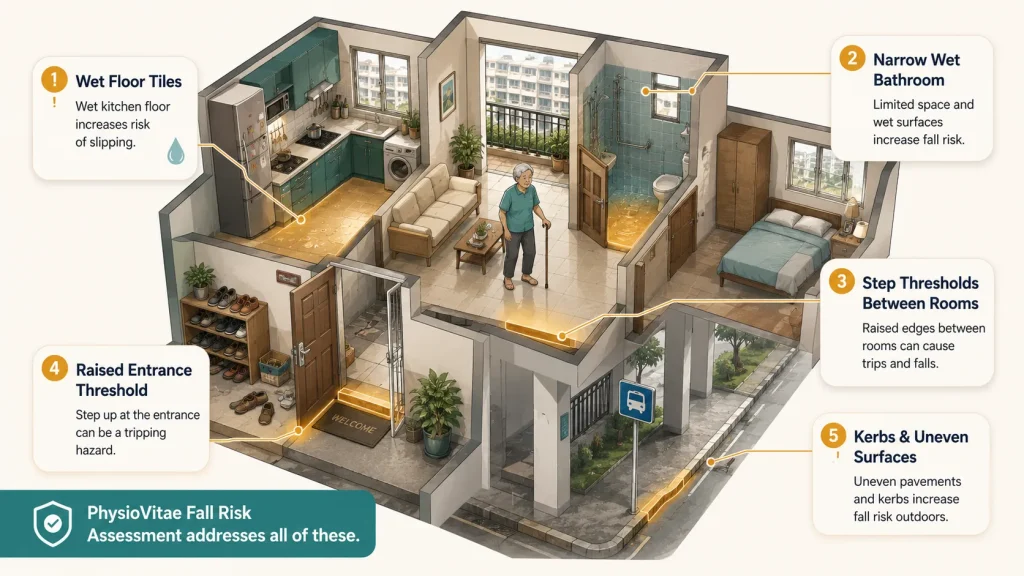
- Fall Risk Assessment, Singapore’s built environment creates specific hazards for older adults: wet kitchen floors, step-thresholds between rooms, narrow HDB bathrooms, and kerbs on the walk to the nearest bus stop. Our falls risk assessment combines standardised clinical testing with a practical discussion of the patient’s home and daily environment.
- Nutritional Status, Sarcopenia, the progressive, age-related loss of muscle mass, is common and frequently underdiagnosed in older Singaporeans. Unintentional weight loss and low protein intake directly affect recovery potential and rehabilitation outcomes. We screen for these using validated tools and, where indicated, coordinate with dietetic support.
- Psychosocial Wellbeing, An older adult who fears falling will unconsciously restrict their movement, which accelerates the very decline they’re trying to avoid. Understanding a patient’s mood, social support, and personal goals for independence is not peripheral to treatment planning. It is central to it.
At PhysioVitae, our clinical assessments are guided by the PhysioVitae SelfCare Model, a framework developed by our founding clinicians that integrates lifestyle medicine principles with evidence-based physiotherapy. This ensures every assessment produces a plan that the patient can genuinely live with.
Our assessments align with standards set by the Allied Health Professions Council (AHPC) of Singapore, and draw on internationally recognised frameworks including the WHO’s Integrated Care for Older People (ICOPE) initiative.
Read More: How Physiotherapy Helps You Achieve a Healthier Quality of Life
What the Geriatric Patient Journey Looks Like at PhysioVitae
The most common thing families tell us when they first bring an elderly parent to PhysioVitae is: “We weren’t sure if this was the right place, or even the right time.”
The honest clinical reality is this: the earlier an assessment takes place, the more options there are. Prevention and early intervention consistently produce better outcomes than rehabilitation started after a crisis.
What Happens During the First Session
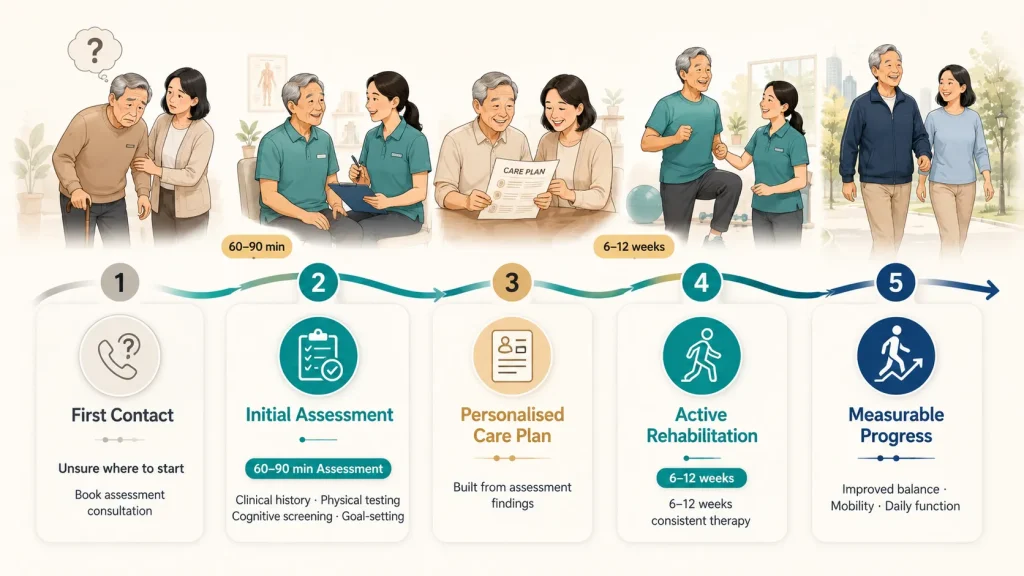
Your first appointment at PhysioVitae is an assessment consultation, not a treatment session. During this initial visit, your physiotherapist will:
- Take a detailed clinical history (medical conditions, medications, fall history).
- Conduct validated physical performance testing (balance, gait, strength).
- Complete relevant cognitive and mood screening where clinically appropriate.
- Review any reports, imaging, or specialist letters you bring along.
- Have an open conversation about your goals and your family’s goals.
All assessments are conducted one-to-one with a specialist physiotherapist. Initial assessment sessions last 45 until 60 minutes to allow adequate time for a thorough evaluation.
What Progress Typically Looks Like
For most older adults, meaningful improvement in balance, mobility, and daily function is achievable within 6 to 12 weeks of consistent therapy. Individual results vary, but this is an honest and clinically grounded benchmark.
Common Scenarios We See at PhysioVitae
- A 72-year-old with knee osteoarthritis whose deconditioning now affects stair safety.
- A 68-year-old man cleared for exercise following a cardiac event (see our Cardiac Rehabilitation programme).
- A family seeking a formal falls risk assessment after an elderly parent experienced recent slips.
- An older adult with early Parkinson’s disease requires a combined neurological and geriatric approach.
Frequently Asked Questions About Geriatric Assessment
Who should have a comprehensive geriatric assessment? A CGA is appropriate for adults aged 65+ experiencing unexplained fatigue, recent falls, difficulty with daily activities, or a new chronic diagnosis like Parkinson’s or Stroke.
How is this different from a GP appointment? A GP manages individual medical conditions. A geriatric assessment examines how multiple conditions, medications, and environments interact to affect overall safety and function.
Do I need a referral? No referral is required. You can book directly with PhysioVitae, though bringing existing medical reports is helpful.
Taking the First Step
If you or a family member has been noticing gradual changes in balance, energy, or independence, a comprehensive geriatric assessment is a sensible starting point.
Explore our Geriatric Rehabilitation services, read our patient education resources, or contact us directly to book your assessment.