

If you are dealing with neck pain from long hours at a desk, physiotherapy at PhysioVitae combines hands-on manual therapy with targeted postural correction to address the root cause rather than just easing the pain. Most patients notice a real difference within a handful of sessions, and you do not need a doctor’s referral to get started.
Why Desk Jobs Cause Neck Pain
Most cases that come to us for neck pain physiotherapy at our Orchard Road clinic have less to do with any single injury and more to do with how the body is held for eight or nine hours a day. When you lean towards a screen, even by a few centimetres, the muscles at the base of your skull and across your upper back have to work far harder to hold your head up. Over a full workday, that adds up to sustained low-level strain on the same small group of muscles, particularly the upper trapezius and levator scapulae.
We also see how much the desk setup itself contributes. A laptop propped up with no separate keyboard, a monitor sitting slightly too low, or a chair with no proper lumbar support all push the head forward and round the shoulders. Add a long commute spent looking down at a phone, and the neck rarely gets a real break from that forward-leaning position.
In our experience treating desk-based professionals across Singapore’s Central Business District and the wider Orchard area, neck pain rarely stays isolated to the neck for long. It often spreads into the shoulders, the base of the skull, and sometimes the mid-back, because the body compensates by shifting load onto nearby muscles and joints.
Common Symptoms to Watch For
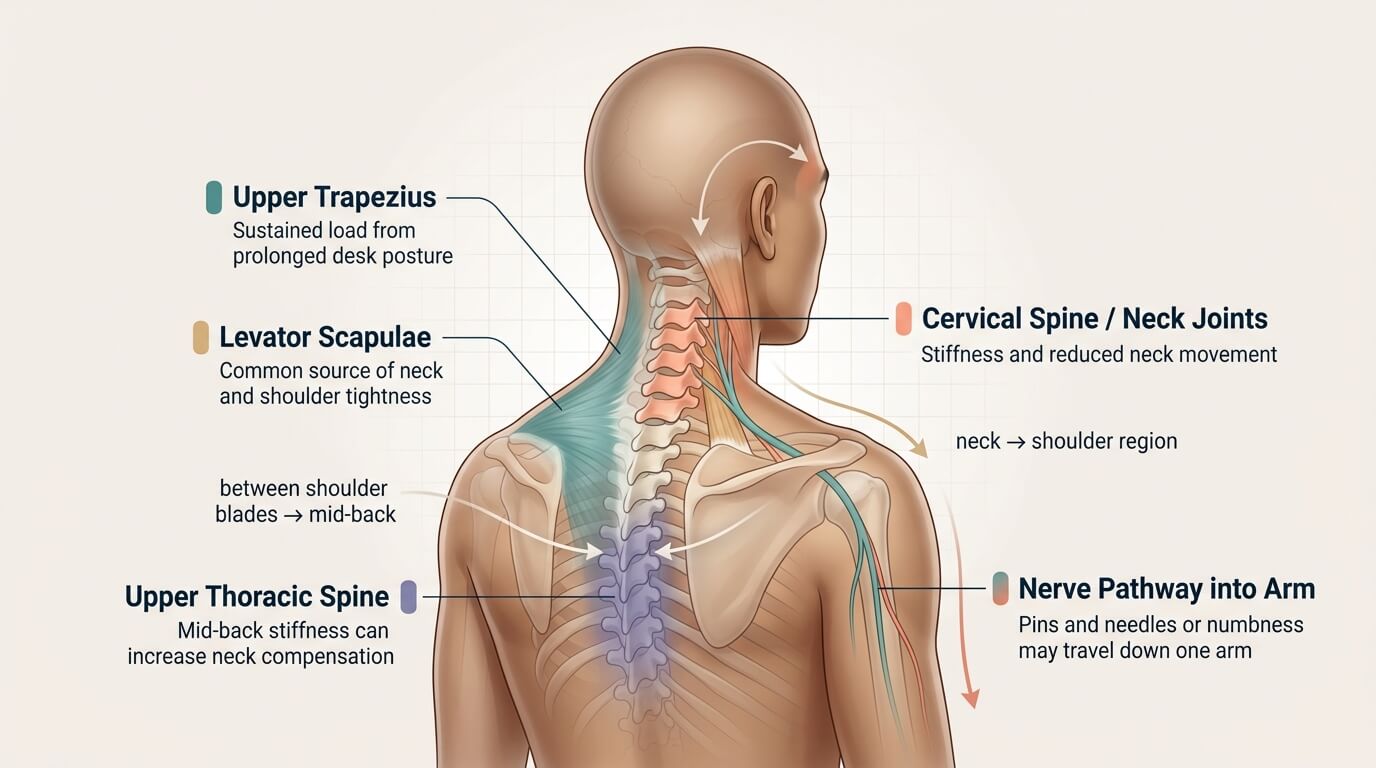
Neck pain from desk work tends to follow a fairly consistent pattern, though the intensity varies from person to person. Common signs include:
- A dull, aching stiffness that is worse first thing in the morning or after a long stretch at your desk
- Headaches that start at the base of the skull and spread toward the temples
- Reduced range of motion, especially when turning to check a blind spot while driving
- A pulling or tight sensation between the shoulder blades
- Occasional pins and needles or numbness travelling down one arm, which can signal nerve involvement
If your symptoms include arm numbness, weakness in your grip, or pain that wakes you at night, it is worth booking an assessment promptly rather than waiting to see if it settles on its own.
How a Physiotherapist Assesses Neck Pain
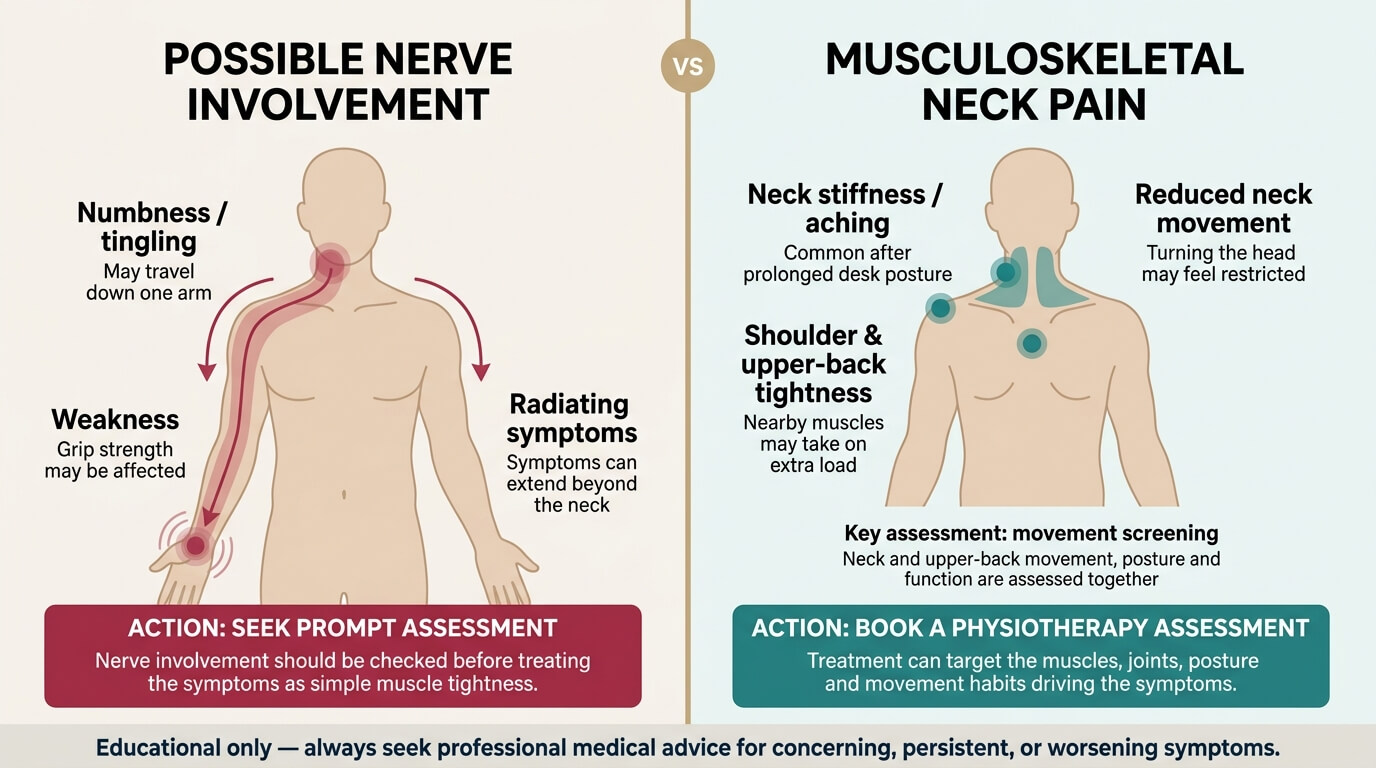
Your first session starts with a detailed conversation about how your pain began, what makes it better or worse, and how it affects your work and daily routine. From there, we move into a physical assessment that typically includes movement screening of the neck and upper back, pain mapping to identify exactly which structures are involved, and functional testing that looks at strength, posture, and how you move through everyday tasks like turning your head or reaching overhead.
We prioritise ruling out nerve involvement before treating the muscular symptoms, because treating tight muscles without checking for nerve irritation first can mask a problem rather than resolve it. In our experience treating hundreds of desk-based patients with neck pain, what feels like a neck problem is often being driven by stiffness lower down, in the thoracic spine between the shoulder blades. When that area cannot rotate and extend properly, the neck ends up compensating and taking on load it was never meant to carry, which is why a proper assessment looks well beyond just the painful area.
Physiotherapy Treatments for Neck Pain
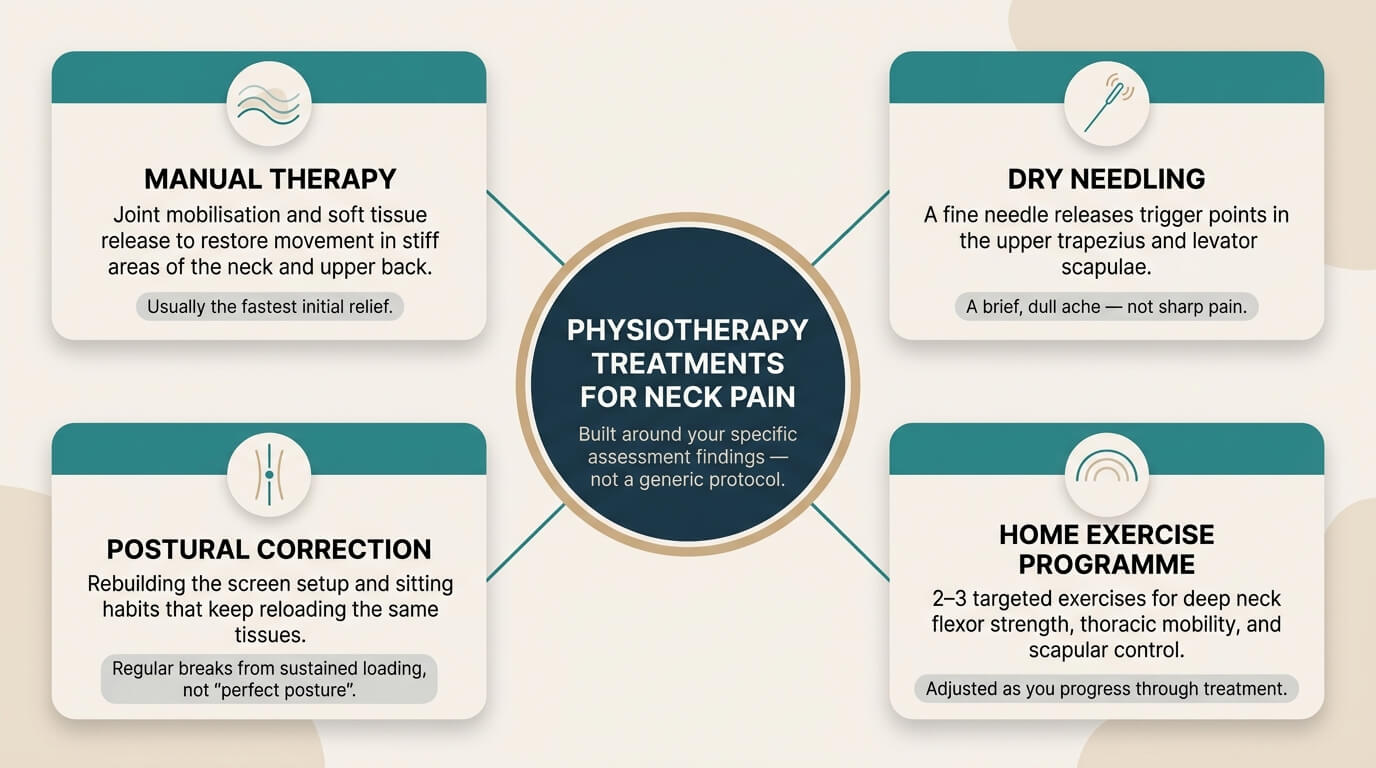
Once we understand what is driving your symptoms, treatment is built around your specific findings rather than a generic protocol.
Manual Therapy
Hands-on techniques, including joint mobilisation and soft tissue release, help restore movement in stiff segments of the neck and upper back and reduce muscle guarding around the area. This is usually where patients feel the fastest initial relief, though it works best paired with the exercise and postural work below.
Dry Needling
For patients with persistent muscle tightness, particularly through the upper trapezius and levator scapulae, dry needling can help release trigger points that manual therapy alone does not always fully resolve. It involves a fine needle inserted directly into the tight muscle band, and while the sensation can feel unusual, most patients describe it as a brief, dull ache rather than sharp pain.
Postural Correction
We work on the positions and habits that keep reloading the same tissues, from how your screen is set up to how you sit through a long call. This is not about achieving perfect posture at all times, which is not realistic for anyone, but about building enough postural awareness and variety that your neck gets regular breaks from sustained loading.
Home Exercise Programme
Every patient leaves their first session with two or three specific exercises, not a long list that is easy to abandon. These usually target deep neck flexor strength, thoracic mobility, and scapular control, and we adjust them as you progress through treatment.
Best Exercises for Desk-Related Neck Pain
Wondering what you can do between sessions? A few simple movements, done consistently, make a real difference for most desk-related neck pain.
- Chin tucks. Gently draw your chin straight back, as if making a double chin, and hold for five seconds. This strengthens the deep neck flexors that a forward head posture weakens over time.
- Thoracic extension over a chair. Sit tall, hands behind your head, and gently arch backwards over the top of the chair to open up the mid-back.
- Doorway chest stretch. Place your forearm on a doorframe and gently rotate your body away from it to stretch the front of the shoulder and chest.
- Shoulder blade squeezes. Draw your shoulder blades down and together and hold for five seconds, which helps counter the rounded shoulder position that desk work encourages.
These are a starting point rather than a full treatment plan. If a particular movement increases your pain or triggers numbness, stop and mention it at your next session so we can adjust your programme.
When to See a Physiotherapist

Wondering how long physiotherapy takes to work? For most desk-related neck pain, patients notice meaningful improvement within four to six sessions, provided the underlying posture and movement habits are addressed alongside hands-on treatment.
Generally, it is worth booking an assessment if your neck pain has lasted more than a week or two without improving, if it is starting to interfere with sleep or concentration at work, or if you notice numbness, tingling, or weakness spreading into your arm or hand. Earlier assessment tends to mean a shorter and more straightforward course of treatment, since muscles and joints that have been guarding for months take longer to settle than symptoms caught early.
Frequently Asked Questions About Neck Pain Physiotherapy
How long does physiotherapy take to relieve neck pain from desk work?
Most patients notice a meaningful reduction in pain and stiffness within four to six sessions, though this depends on how long the pain has been present and whether postural habits are addressed alongside treatment. Longer standing cases sometimes need ten to twelve sessions combined with an ongoing home programme.
Do I need a doctor’s referral to see a physiotherapist for neck pain?
No. Physiotherapists in Singapore are direct access practitioners, so you can book an assessment at PhysioVitae without a referral. If we find something that needs medical review first, we will let you know and help you arrange it.
Can neck pain from poor posture be fully corrected?
In most cases, yes, particularly when it is caught early and addressed with a combination of manual therapy, targeted exercise, and practical changes to your workstation. Long-standing cases may not disappear completely, but the goal is always a significant, lasting reduction in pain and a return to normal function, not just short-term relief.
Is dry needling painful for neck pain treatment?
Most patients describe a brief, dull ache or a muscle twitch when the needle reaches a tight band, rather than sharp pain. It is generally well tolerated, and your physiotherapist will always explain the process and check your comfort before proceeding.
How much does physiotherapy for neck pain cost in Singapore?
Sessions at PhysioVitae typically range from S$150 to S$280, depending on the complexity of your case and the physiotherapist you see. We provide detailed receipts for insurance claims, and some integrated shield plans may require a specialist referral letter for eligibility.
Should I rest or stay active when my neck hurts?
Complete rest is rarely the answer. Gentle movement within a comfortable range generally helps more than staying completely still, though it is worth having your neck properly assessed if pain persists beyond a few days, so your activity can be guided by what is actually driving your symptoms.
Book a Neck Pain Assessment
If you are not sure whether your neck pain needs physiotherapy or a bit more rest, an assessment consultation is designed to help you work that out, rather than commit you to a long treatment plan upfront. You can learn more about our musculoskeletal physiotherapy services, meet our team of physiotherapists, or get in touch directly to book a neck pain assessment. Whichever direction your pain has been heading, an accurate diagnosis is usually the fastest route to lasting relief.