
Physiotherapy in Singapore covers a far broader range of conditions than most people realise, from back pain and sports injuries to cardiac rehabilitation, neurological recovery, and chronic disease management. Whether you are searching for a private physiotherapy clinic in Singapore after an injury, exploring options for an elderly parent who needs rehabilitation at home, or simply trying to understand what a physiotherapist actually does, this guide covers the essentials.
What Does a Physiotherapist Do?
A physiotherapist is an allied health professional registered with the Allied Health Professionals Council (AHPC) of Singapore who assesses, diagnoses, and treats conditions that affect movement, function, and physical health. The scope of practice is wide, and frequently underestimated.
At its core, physiotherapy addresses the underlying cause of a problem, not just its symptoms. A patient who comes in for lower back pain may have underlying movement pattern dysfunction, weak hip stabilisers, or a desk setup creating sustained spinal load. A physiotherapist’s job is to find and treat that root cause, which is why physiotherapy that works tends to produce lasting results, not temporary relief.
Common Conditions Treated by Physiotherapy in Singapore
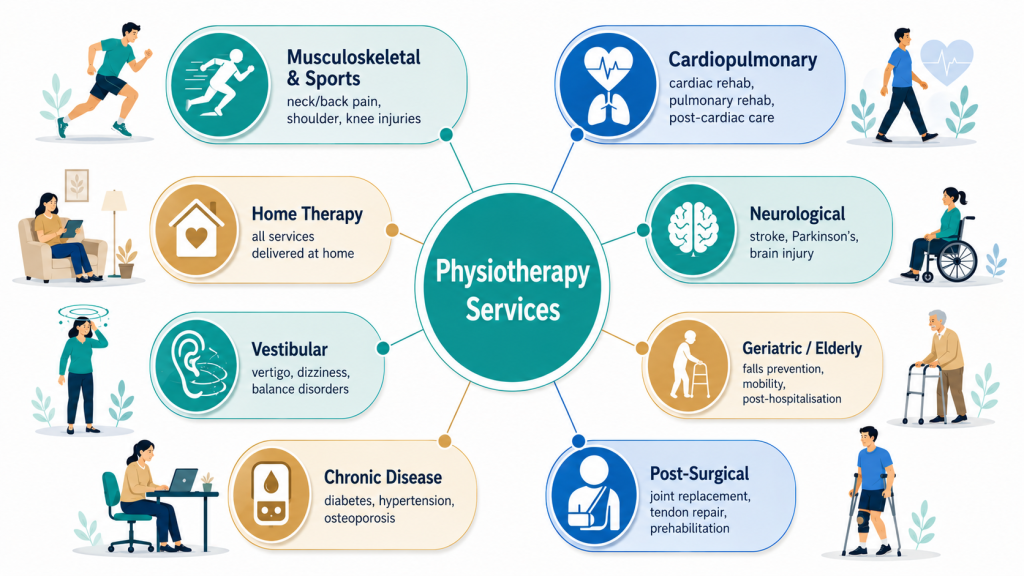
Physiotherapy is relevant to a much wider range of presentations than most people associate with it. The following gives a sense of the breadth, though this is not an exhaustive list. For the full scope of what we manage, see our complete list of physiotherapy services.
Musculoskeletal conditions are the most commonly associated with physiotherapy, and for good reason. Singapore’s working population presents with a predictable cluster of desk-related and activity-related injuries:
- Neck pain and cervicogenic headaches from prolonged sitting and screen use
- Lower back pain, acute, recurrent, and chronic
- Shoulder pain, including rotator cuff injuries and frozen shoulder
- Knee pain, including patellofemoral pain, ligament injuries, and osteoarthritis
- Tendon conditions, Achilles tendinopathy, golfer’s and tennis elbow, plantar fasciitis
- Sports injuries across all recreational and competitive activity levels
- Post-surgical rehabilitation, joint replacements, spinal procedures, tendon repairs
Beyond musculoskeletal care, PhysioVitae’s team also manages:
- Cardiopulmonary conditions, heart failure, post-cardiac event recovery, COPD, pulmonary fibrosis
- Neurological conditions, stroke, Parkinson’s disease, acquired brain injury
- Geriatric presentations, frailty, falls risk, mobility decline, post-hospitalisation rehabilitation
- Chronic disease, diabetes, hypertension, high cholesterol, obesity
- Vestibular disorders, vertigo, dizziness, and balance problems
The thread connecting all of these is the same: physiotherapy provides a structured, evidence-based pathway to improved function and quality of life, regardless of the clinical domain. Behind this work is a multidisciplinary team with specialist training across these areas, you can meet our physiotherapy team and see each clinician’s areas of focus.
What Happens During Your First Physio Appointment?
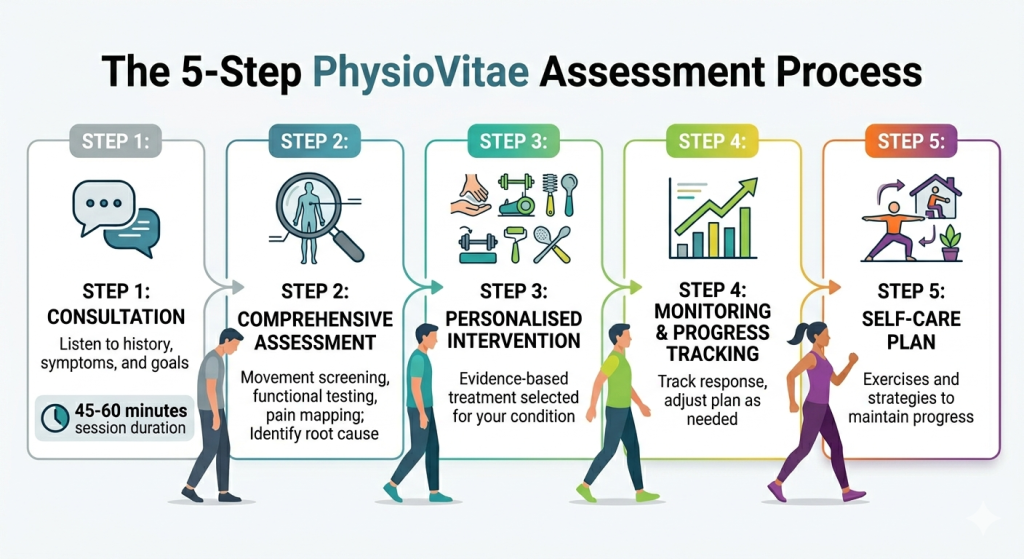
One of the most common reasons people delay seeking physiotherapy is uncertainty about what to expect. The short answer: your first appointment is primarily an assessment, a thorough, unhurried conversation and clinical evaluation designed to understand your situation fully before any treatment begins.
| Stage | What Happens |
| 1 | During a consultation, your physiotherapist listens to your history, symptoms, and goals |
| 2 | Movement screening and functional testing to identify root cause |
| 3 | Personalised Intervention, treatment selected from evidence-based modalities appropriate to your condition |
| 4 | Monitoring & Progress Tracking, response to treatment tracked and plan adjusted as needed |
| 5 | Self-Care Plan, you leave with exercises and strategies to maintain and build on in-session progress |
Sessions at PhysioVitae typically last 45 to 60 minutes. Your initial consultation may run slightly longer, as the assessment is necessarily more comprehensive than follow-up sessions. At the end of your first appointment, your physiotherapist will outline a realistic treatment plan, including an estimated number of sessions, so you can plan your schedule and budget accordingly.
Wondering how long physiotherapy takes to work? For most straightforward musculoskeletal conditions, an acute ankle sprain, early-stage back pain, and a minor shoulder strain, meaningful improvement is typically seen within four to six sessions. More complex or longstanding conditions, post-surgical recovery, or neurological rehabilitation require a longer, more structured course of treatment, and your physiotherapist will give you an honest timeline at your first session. For more information on timelines, fees, and what to expect, our physiotherapy FAQ page answers the most common questions in detail.
Read more: 5 Signs You Need to See a Physiotherapist at Physiovitae Singapore
Types of Physiotherapy Services in Singapore
Not all physiotherapy clinics in Singapore offer the same scope of services. Understanding what is available helps you match your needs to the right provider. The table below summarises the disciplines covered under our full physiotherapy services range.
|
Service Area |
Conditions Treated |
Who It Is For |
| Musculoskeletal & Sports | Back/neck pain, shoulder, knee, ankle, sports injuries, tendon conditions | Adults with pain or injury |
| Cardiopulmonary | Cardiac rehabilitation, pulmonary rehab, chest physiotherapy | Post-cardiac event patients |
| Neurological | Stroke, Parkinson’s disease, acquired brain injury | Stroke or neurological patients |
| Geriatric / Elderly | Falls prevention, mobility restoration, post-hospitalisation recovery | Elderly adults |
| Post-Surgical | Joint replacement, tendon repair, spinal surgery, prehabilitation | Post-surgery patients |
| Chronic Disease | Diabetes, hypertension, high cholesterol, weight management, osteoporosis | Chronic condition patients |
| Vestibular | Dizziness, vertigo, balance disorders | Patients with vertigo |
| Home Therapy | All of the above, delivered in the patient’s home environment | Patients with limited mobility |
Outpatient Physiotherapy Clinics
Most private physiotherapy in Singapore is delivered in an outpatient clinic setting, you attend scheduled appointments and are seen one-on-one by a registered physiotherapist. Outpatient clinics offer direct access, meaning you can book without a GP referral, and sessions are typically longer and more comprehensive than those available through the polyclinic system.
PhysioVitae is based at 360 Orchard Road, #12-06 International Building, and is available Monday to Friday, 9am–6pm, and Saturday, 9am–1pm. Sunday and public holiday appointments are available by arrangement. Get in touch with our clinic to request a slot.
Home Physiotherapy Visits
For patients who cannot travel safely or comfortably to a clinic, including post-surgical patients in early recovery, elderly adults with significant mobility limitations, or those managing complex medical conditions, home physiotherapy brings the same standard of assessment and treatment to the patient’s own environment.
PhysioVitae’s home therapy service covers the full range of physiotherapy disciplines, not just basic mobility exercises. A physiotherapist will conduct a comprehensive assessment in your home, design a personalised programme, and deliver treatment on an agreed schedule. Home therapy is also an opportunity to assess the home environment itself, identifying fall hazards, evaluating accessibility, and advising on assistive equipment where relevant. You can find full details under our home physiotherapy service listing.
Geriatric and Elderly Physiotherapy
Older adults have physiotherapy needs that are qualitatively different from those of younger patients. Geriatric physiotherapy accounts for the complexity of aging, frailty, polypharmacy, cognitive changes, falls risk, and the interaction between multiple conditions, rather than treating each problem in isolation. PhysioVitae’s geriatric rehabilitation programme is designed around this whole-person model, and is available both in-clinic and as a home therapy service.
Read More: How Physiotherapy Helps You Achieve a Healthier Quality Of Life
How to Choose the Right Physiotherapy Clinic in Singapore
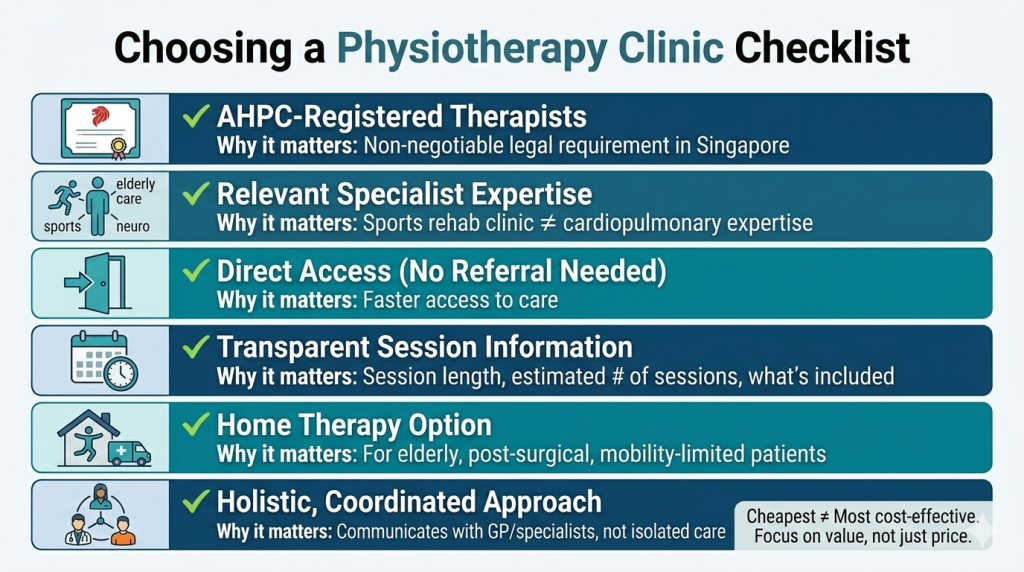
The physiotherapy sector in Singapore ranges from hospital outpatient departments and polyclinics to specialist private clinics. The right choice depends on your condition, your timeline, and what kind of care approach you are looking for.
| What to Look For | Why It Matters |
| AHPC-registered therapists | Non-negotiable. All practising physiotherapists in Singapore must hold AHPC registration. |
| Relevant specialist expertise | A clinic that lists sports rehab may not have cardiopulmonary expertise, and vice versa. Match the clinic’s specialisations to your condition. |
| Direct access (no referral needed) | Many private clinics accept direct bookings. This speeds up your access to care significantly. |
| Transparent session information | A reputable clinic will tell you clearly how long sessions are, approximately how many you’ll need, and what is included. |
| Home therapy option | For elderly patients, post-surgical recovery, or anyone with mobility limitations, home therapy availability matters. |
| Holistic, coordinated approach | Look for clinics that communicate with your GP or specialist, not those that operate in isolation from your wider care. |
It is also worth noting that the cheapest option is not always the most cost-effective one. A patient who attends eight sessions at a budget clinic without meaningful progress and then switches to a specialist clinic has spent more time and money than if they had started in the right place. For complex, persistent, or recurrent conditions, the quality of the initial assessment and the depth of the treatment plan often determine the entire trajectory of recovery. To understand how PhysioVitae approaches assessment-led care, learn more about our clinic and clinical philosophy.
Is Physiotherapy Covered by Insurance in Singapore?
Insurance coverage for physiotherapy in Singapore depends entirely on your individual policy. Here is a practical summary of the main scenarios:
- Corporate / employer outpatient benefits, Many workplace insurance plans include an outpatient component covering physiotherapy up to an annual limit, commonly $300–$600. These typically allow direct reimbursement on submission of receipts and a clinical invoice. PhysioVitae provides itemised invoices as standard.
- Integrated Shield Plans (ISPs), ISP riders may cover physiotherapy if it is directly connected to a hospitalisation claim or an accident event covered under the plan. Coverage terms, panel requirements, and claim ceilings vary by insurer and tier. Check with your insurer before your first session.
- MediShield Life, Does not cover standalone outpatient physiotherapy. Designed for major inpatient and day-surgery claims.
- Personal accident policies, May cover physiotherapy following an accident event, subject to policy terms.
If you are uncertain about your coverage, our front desk team can assist with documentation and invoicing formats to support your claim. We recommend contacting your insurer before your first appointment to confirm any pre-authorisation requirements or panel conditions. For further insurance and billing questions, see our dedicated physiotherapy FAQ page.
Frequently Asked Questions About Physiotherapy in Singapore
Do I need a doctor’s referral to see a physiotherapist in Singapore?
No. In Singapore, you can access physiotherapy directly without a GP referral. You can book your appointment at PhysioVitae online, by phone, or via our website chat. Full booking options are listed on our contact page. If you have recently had surgery or have complex medical conditions, we will coordinate with your doctor to ensure your programme is appropriate.
What is the difference between physiotherapy and massage therapy?
Massage therapy focuses on soft tissue manipulation for relaxation or localised relief. Physiotherapy is a regulated healthcare profession that includes comprehensive clinical assessment, diagnosis, and a structured treatment programme designed to address the root cause of your condition, which may include manual therapy, exercise prescription, dry needling, shockwave therapy, patient education, and more. All PhysioVitae physiotherapists are AHPC-registered.
How many physiotherapy sessions will I need?
This depends on your condition, recovery goals, and how your body responds to treatment. Straightforward acute conditions may resolve in four to six sessions. Chronic conditions, post-surgical recovery, or neurological rehabilitation typically require a longer structured programme. Your physiotherapist will provide an estimated treatment timeline at your first consultation.
Can physiotherapy help with chronic pain?
Yes. Physiotherapy is one of the most evidence-based approaches to managing chronic musculoskeletal pain. Treatment addresses the biomechanical, neuromuscular, and lifestyle factors that sustain chronic pain, rather than simply providing temporary symptomatic relief. Many patients with long-standing conditions that have not responded well to other treatments find that a structured physiotherapy programme produces meaningful, lasting improvement. Our patient education hub includes condition-specific guides for several common chronic pain presentations.
What should I wear and bring to my physiotherapy appointment?
Wear comfortable clothing that allows easy movement. Athletic wear is recommended, especially if exercise is part of your programme. If you are being assessed for a lower limb or back condition, clothing that allows the physiotherapist to observe your movement clearly is helpful. Bring any relevant medical reports, imaging results (X-ray, MRI), or discharge summaries from the hospital if you have them.
Does PhysioVitae offer physiotherapy at home?
Yes. PhysioVitae’s home therapy service is available for patients who cannot travel to the clinic comfortably or safely, including post-surgical patients, elderly adults with significant mobility limitations, and those with complex medical conditions. The same comprehensive assessment and personalised treatment standard applies. Contact our team to arrange a home therapy visit.
Find the Right Physiotherapy for Your Needs
If you are not sure whether your symptoms need physiotherapy, what type of care would be most appropriate, or how to get started, the clearest next step is a proper clinical assessment. You do not need to have a diagnosis, that is part of what the first session is for.
To explore the full range of conditions and programmes we manage, visit our physiotherapy and rehabilitation services page. For clinical reading on specific conditions, you will find in-depth articles on the PhysioVitae blog, including pieces on musculoskeletal chest pain and how physiotherapy and Pilates can work together as part of a broader recovery strategy. For self-management material between sessions, see our patient education library.
When you are ready to book, contact our team here or call us at +65 8017 1206. We are at 360 Orchard Road, #12-06 International Building, Singapore 238869, and available Monday to Friday, 9am–6pm, and Saturday, 9am–1pm.